Kenzi Macleod
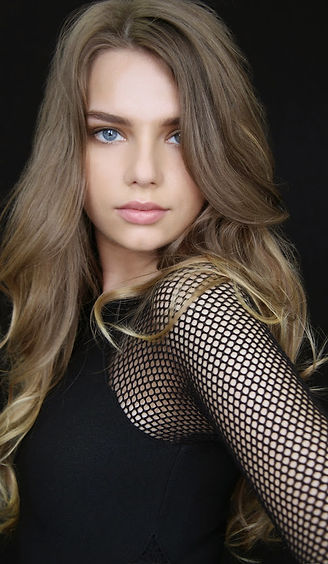
One of several subspecies of merfolk, Kenzi's people in their natural form have smooth, sleek skin, which shimmers and becomes lightly iridescent at the tail. Born off the coast of Australia, near Sydney, Kenzi was fascinated by those on land, always dreaming of one day being able to move amongst those of that world.
Biology:
The average species can stay underwater for as long as 15 minutes; some can remain submerged while holding their breath for 25 minutes. They breathe through their nasal passages, which have an inner muscular flap that closes when they go under water, keeping water out of their lungs.
Merfolk lungs are the same size in relation to their body as other mammals. What allows them to hold their breath as long as they can is the fact that they contain more alveoli, or tiny air sacs, in each lung. There are two layers of oxygen-carrying capillaries instead of the one found in most mammals, and the membrane surrounding the lungs is elastic and thick. These differences allow the merfolk to have a much more efficient exchange of gases from the lungs to the bloodstream.
Merfolk are aided by the fact that they can use a sort of selective circulation process; when diving, the blood flow to the skin, digestive system and outer extremities slows down or stops altogether. This leaves the heart, brain and tail muscles able to still function. The atmospheric pressure of a deep dive forces air out of the lungs and into the nasal passages and forces blood from the heart into a complex network of capillaries. They are thus able to squeeze every bit of oxygen from their lungs in this way to stay down. Merfolk do not get the bends as humans do because they are not breathing compressed air.
They do not drown when they sleep because they are able to float just beneath the surface of the water due to their bone structure and differences in their lungs from other mammals. This makes them more buoyant, and small movements of their tail flukes propel them to the surface so they can take a breath every now and then as they sleep.
They seek shelter in underwater caves to avoid detection by humans and other predators.
Strengths:
Swim speed: ~35 kph, more if pushed
Breath: up to 25 minutes
Depth: 300 meters
Life span: oldest on record is 358
Increased agility and flexibility
Siren's song
Telepathy with some species
Weaknesses:
Moonstruck: During the full moon, the ocean's pull is irresistible
Dehydration: Merfolk must be near the water in order to survive. Too long out of water and they will die.
Mertail: It takes a great deal of energy and practice to shift into human form. Younger merfolk may find it very difficult, if not impossible to maintain for any great length of time and often a focal point is required to successfully complete the transition.
Abilities:
Elemental manipulation and control, typically manifesting in:
a) The ability to create waves, wind, and storms. This skill is limited due to her age and experience.
b) The ability to draw energy from the earth/ocean for healing.
Mermaid's song:
Unlike the song of a siren, the mermaid's song has a more practical use in luring a mate.
Telepathy:
The transference of thought between two subjects of varying species through parapsychology.
Lineage:
Kenzi,
Daughter of Serena (James Macleod);
Daughter of Circe (Steven Brooks);
Daughter of Aphris (Michael McCormack);
Daughter of Diana (Naveen Patel);
Daughter of Mahala (Joshua Wright);
Daughter of Fortunata (Sebastian Vangor);
Daughter of Isolde (Stephen Finnegan);
Daughter of Laelia (Edward Angevin);
Daughter of Viviana (Josef Kostan);
Daughter of Isabella (Alexandre Vieuxpont)